 By
By
The Quick Breakdown
-
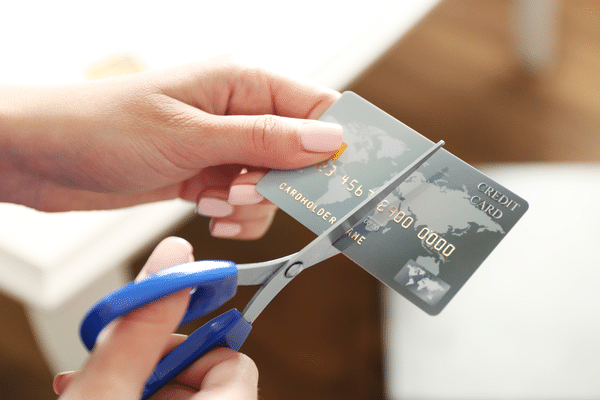
Canceling a credit card is not the same as cutting it up. The account has to be formally closed with your card issuer.
-
Before you call, pay off your balance, cancel any autopay agreements tied to the card, and redeem any rewards.
-
Closing a card can affect your credit score by raising your utilization ratio and reducing your average account age.
-
After cancellation, it can take 30 days or more for the closure to appear on your credit report.
-
Once it does, verify that all three bureau reports show the account as closed at your request.
If you think cutting up a credit card is the same as canceling it, it is not. A canceled card means the account is formally closed with the issuer. A cut-up card still exists as an open account on your credit report. Fortunately, the process of actually closing an account is not complicated. It usually takes a few minutes of preparation and a single phone call.
This guide walks you through exactly how to do it, what to watch out for, and what to expect on your credit report afterward.
What to Do Before You Cancel
A little preparation before you make the call will save you headaches later.
1. Cancel Autopay Agreements
If any subscriptions or bills are set to charge the card automatically, move them to another card before you close the account. A failed autopay after cancellation can result in late fees, penalties, and a missed payment that could hurt your credit scores.
2. Redeem Your Rewards
Check your rewards balance and redeem anything you have earned before closing. Some programs have minimum redemption thresholds, and any balance below that minimum may be forfeited when the account closes. You can usually find your balance on the card issuer's website or by calling the number on the back of the card.
3. Notify Authorized Users
Let any authorized users know you are closing the account before you make the call. If an authorized user makes a charge after you initiate the cancellation process, you are still responsible for paying it off as the primary cardholder.
4. Pay Off the Balance
Your card issuer will require a zero balance before closing the account. The amount shown on your last statement may not reflect your actual payoff amount, since interest can accrue between your statement date and when you pay. Call your issuer to get the exact payoff figure before submitting your final payment.
Wait one to two business days after your payment posts before calling to cancel.
Get My 3-Bureau Credit Reports and Scores

How to Cancel Your Credit Card
1. Call Customer Service
Call the customer service number on the back of your card. Tell the representative you have confirmed your balance is zero and that you want to close the account. Ask them to note that the account is being closed at your request (this distinction matters for how it appears on your credit report). Request written confirmation of the closure, and write down the date of the call and the name of the representative you spoke with.
2. Can You Cancel a Credit Card Online?
Some card issuers allow you to close an account through their website or mobile app, but not all of them do. Many still require a phone call.
Check your issuer's website or the back of your card for their specific cancellation policy. If online cancellation is available, you will typically find the option in your account settings under something like "Manage Account" or "Account Services."
3. Follow Up in Writing (Optional)
As a backup layer of documentation, you can follow your phone call with a written cancellation request sent by certified mail. Include your name, address, contact number, account number, the date you called, and a statement that the account was closed at your request. Keep a copy for your records.
Canceling a Credit Card with a Balance
You can request to close a credit card that still has a balance. The account will stop accepting new charges, but you are still responsible for paying off the remaining balance under your original agreement. Some issuers may convert the account to a payment-only status while you pay it down. Ask your issuer whether any additional fees apply before going this route.
Does Canceling a Credit Card Hurt Your Credit?
It can, and it is worth understanding why before closing any account.
Closing a credit card affects two areas of your credit profile:
Credit Utilization
When you close a card, you lose its available credit limit. If you carry balances on other cards, your overall utilization ratio increases, which can lower your scores. For example, if you have $2,000 in balances across all your cards and $10,000 in total available credit, your utilization is 20%. Close a card with a $3,000 limit and that ratio jumps to roughly 29% immediately. You can check out Bankrate’s credit utilization ratio tool to help you better understand.
Length of Credit History
Older accounts contribute to your average account age. Closing a long-standing card can reduce that average over time. The account will remain visible on your credit report for up to 10 years after closing, so the impact tends to be gradual rather than immediate.
The overall effect depends on your credit profile. If the card is relatively new and carries a low limit, closing it is unlikely to cause significant movement. If it is one of your oldest accounts with a high limit, the effect could be more noticeable.
Should You Cancel Your Credit Card?
Canceling is not always the wrong move. Here are some situations where it can make sense.
High Annual Fees
If you are paying an annual fee on a card you rarely use and the rewards or benefits do not justify the cost, canceling is a reasonable financial decision.
Divorce
If you share a joint credit card with a spouse and need to separate your finances, closing the account can reduce your liability for future charges. The issuer may require the balance to be paid in full first.
Overspending Concerns
If a specific card is contributing to spending you cannot pay off each month, closing it may be the more practical choice compared to allowing a balance to grow.
In other situations, it may be better to keep the account open and simply stop using it. An unused card with a zero balance and no annual fee is generally not hurting you, and keeping it open supports your credit utilization, preserves your account age, and leaves a spending option available if you need it.
What Happens to Your Credit Report After You Cancel
It may take 30 to 45 days or more for the closure to appear on your credit report. After that window, check your reports at all three bureaus to confirm the account shows as "closed at consumer's request." If it is not reflected correctly, contact your card issuer and ask them to update the reporting with the bureaus. If the error persists, you can file a dispute directly with whichever bureau is showing the incorrect information.
Checking Your Credit Reports After Cancellation
Once your credit card account has been closed, verifying the closure on your credit report is an important final step.
ScoreSense is a credit monitoring product that gives members access to credit scores and reports from all three bureaus: Equifax, Experian, and TransUnion. Reviewing all three lets you confirm the closed account is reflected accurately at each bureau, since card issuers report to each one independently and discrepancies do occur.
New credit scores and reports update is available each month. Members must log in to pull it. Millions of members have used ScoreSense to monitor their credit and catch errors, unfamiliar accounts, or unexpected changes.
If you find an error on your credit report after canceling a card, ScoreSense's Dispute Center provides step-by-step instructions to guide you through filing a dispute directly with Equifax, Experian, or TransUnion. ScoreSense does not file disputes on your behalf, but the Dispute Center walks you through the process at each bureau.
Get My 3-Bureau Credit Reports and Scores
Frequently Asked Questions
Does canceling a credit card hurt your credit score?
It can. Closing a card reduces your total available credit, which raises your credit utilization ratio if you carry balances on other cards. It can also affect your average account age if the card is one of your older accounts. The impact depends on your overall credit profile.
Can I cancel a credit card online?
Some issuers allow online cancellation through your account settings, but not all do. Many still require a phone call. Check your card issuer's website or call the number on the back of your card to find out which options are available to you.
Can I cancel a credit card with a balance?
Yes. You can request to close an account that still carries a balance. The account will stop accepting new charges, but you remain responsible for paying off what you owe. Ask your issuer whether any additional fees apply before proceeding.
How long does it take for a canceled credit card to show on my credit report?
It typically takes 30 days or more. Once it is updated, the account may remain on your report for up to 10 years after closing.
Will a canceled credit card still show on my credit report?
Yes. Closed accounts remain on your credit report, typically for up to 10 years for accounts in good standing. This is not necessarily harmful. The account continues to contribute to your credit history length for as long as it appears.
What should I do if my canceled credit card still shows as open on my credit report?
Contact your card issuer and ask them to update the account status with the credit bureaus. If the account continues to show incorrectly, you can file a dispute directly with the bureau reporting the error.
Should I cancel a credit card I never use?
Not necessarily. An unused card with no annual fee and a zero balance generally supports your credit by contributing available credit and account history. If the card carries an annual fee you are not getting value from, canceling may make more sense.